Desk Toys That Stay on the Desk: Tops, Newton's Cradles and Sand Timers
The desk toys worth keeping are the ones that do one physical thing well. Here's how to tell.
4 min read
- V-strings, alignment, ball material, heavy base
- 4 checks
- The standard magnetic ball set
- 216 × 5 mm
- Sand timer minutes: a break, a call, a work block
- 5 / 15 / 30
Most desk toys get played with for a week and then quietly moved to a shelf. The ones that stay are simple physical objects that do one thing well: a top that spins for minutes, a cradle that keeps clicking, a timer you can glance at.
Each one has a couple of specs that decide whether it works or disappoints. Here they are.
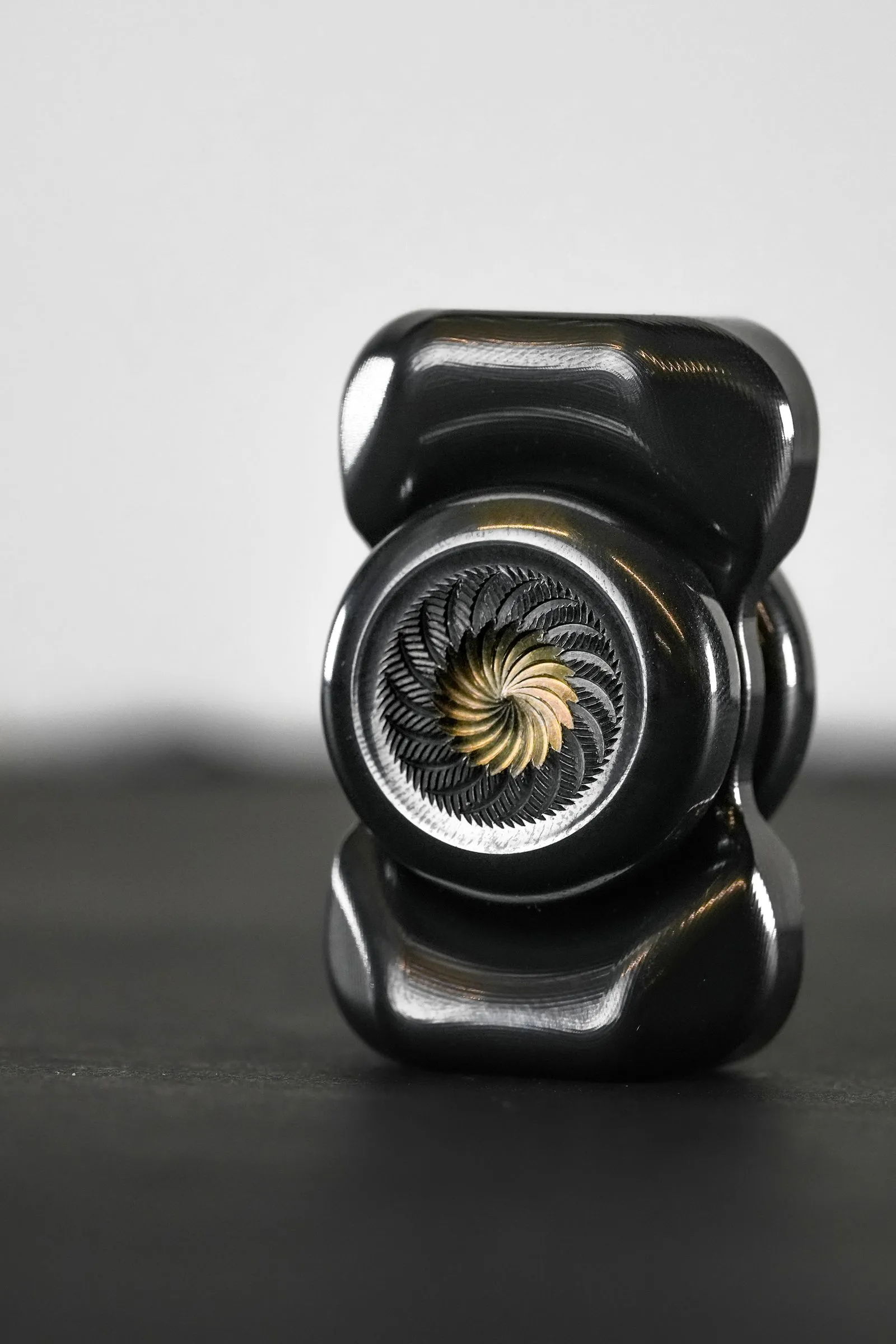
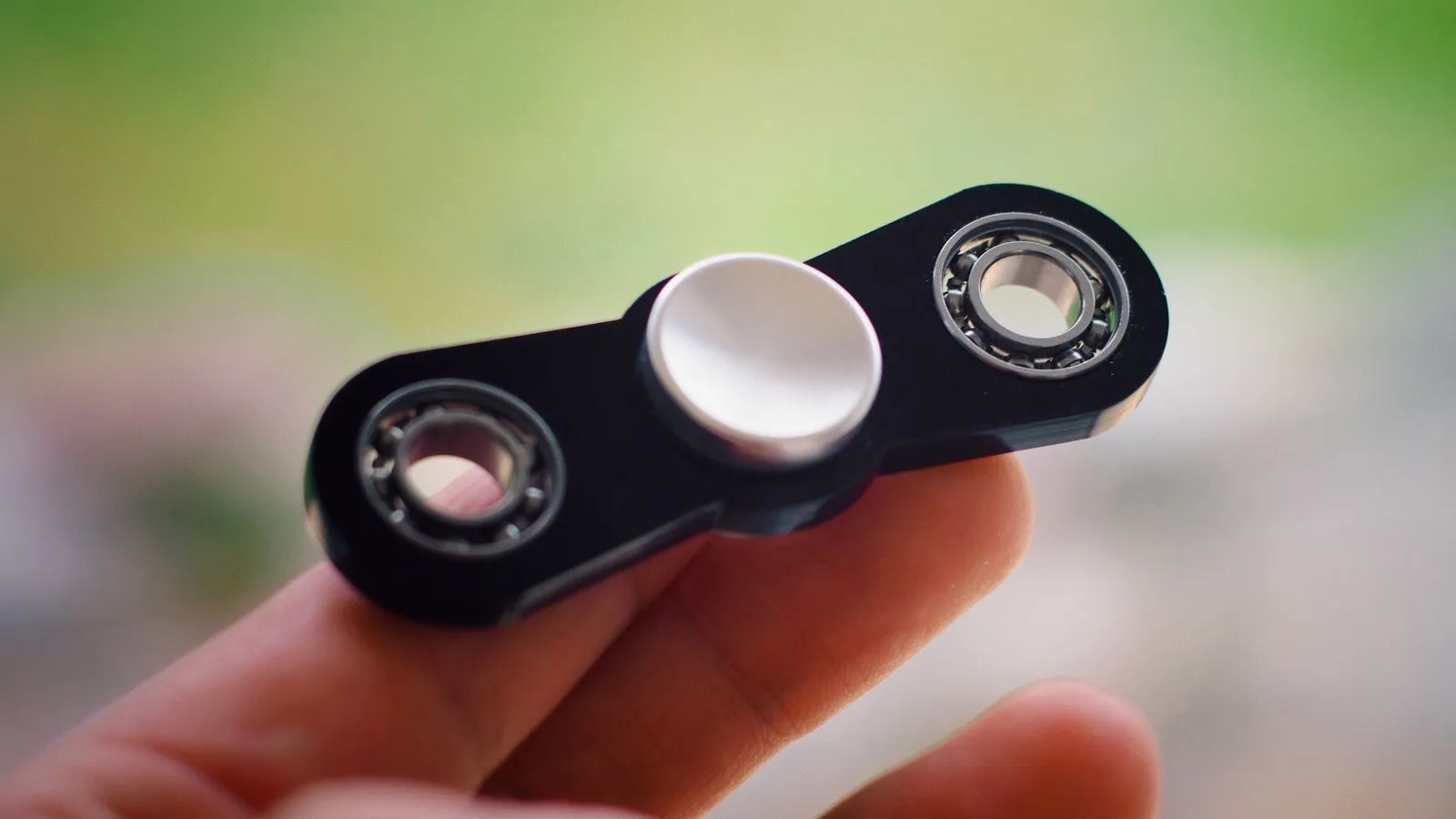
Why some spinning tops spin longer
A good desk top can run for several minutes from one twist. A bad one wobbles out in under thirty seconds. Three things make the difference:
- Weight out at the rim. Mass far from the axis carries more rotational momentum, so friction takes longer to use it up. Good tops are shaped like a wide, heavy disc on a thin stem, not a cone.
- A low centre of gravity. The lower the mass sits relative to the tip, the more stable the spin, and the longer it stays upright as it slows.
- A hard, fine tip. The tip is where the friction happens. A fine point on a hard material, often a ceramic or hardened steel ball, touches the desk at a single tiny spot and loses very little energy.
Surface matters too. A top spins longest on something hard and smooth, like glass or a ceramic dish. A wooden desk or a mat eats spin time.
Wooden vs steel tops
| Wooden top | Steel or brass top | |
|---|---|---|
| Spin time | Shorter, often well under a minute | Longer, often several minutes on a hard surface |
| Weight | Light | Heavy for its size |
| Desk surface | Kind to it | Can mark soft wood or a glass top if dropped |
| Look | Colour, grain, often stacked designs | Machined, polished or knurled |
| Typical price | $10–30 | $30–120 |
If you want long spins, go steel or brass. If you want colour and no scratches, go wood. Many machined tops come with a small concave dish to spin on, which keeps them contained and protects the desk.
4 checks before buying a Newton’s cradle
A Newton’s cradle only keeps clicking if it’s built right. Cheap ones stall in seconds.
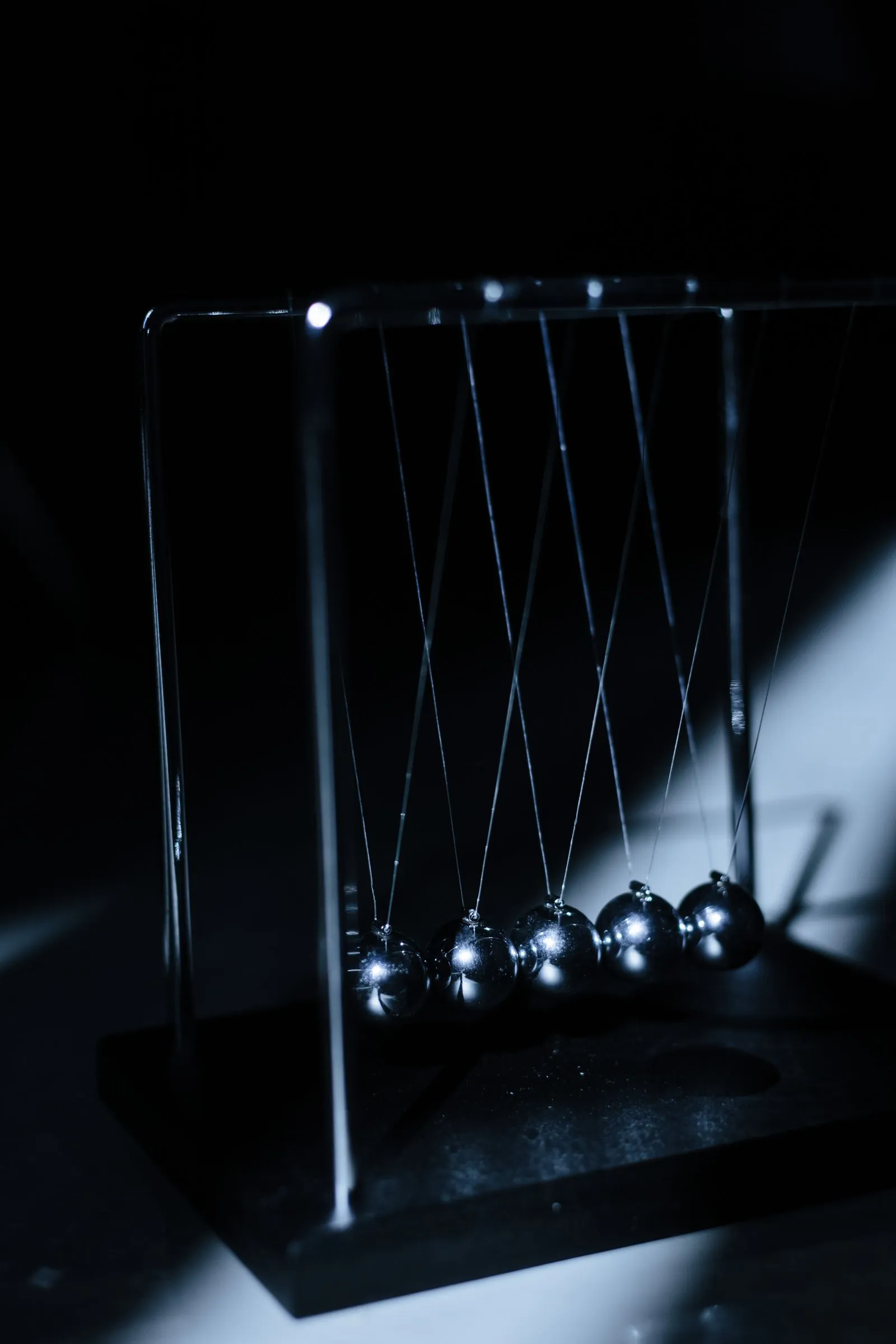
- Two strings per ball, in a V. Each ball should hang from two strings angled out to the frame. The V holds every ball to a single plane of swing. With one string, balls twist and drift, and the energy goes sideways.
- Balls in a dead-straight line. At rest, the balls should hang in one perfectly straight row, all at the same height. If one hangs a fraction low, the collisions go off-centre and the swing dies.
- Hard, polished steel balls of the same size, just touching. Hard steel passes energy through almost cleanly. Plastic or soft metal balls absorb it. They should touch at rest, with no visible gap.
- A heavy base that doesn’t slide. A light base creeps across the desk as the balls swing, and every bit of movement is energy lost. Look for a solid wood, stone or weighted metal base.
The honest caveat: even a well-made cradle loses its strings’ alignment over time, especially if it gets knocked or tangled. Adjustable string clamps on the frame make realigning it a two-minute job instead of a lost cause.
Magnetic ball sets
Magnetic balls, small neodymium spheres you can shape into chains, sheets and polyhedra, are one of the most absorbing desk toys going. The standard set is 216 balls at 5 mm, which comes from a 6 × 6 × 6 cube.
They come with rules:
- Keep them well away from kids and pets. This is the big one. If two or more magnets are swallowed, they can pull together through the walls of the intestine and cause serious injury. Treat any missing ball as a real problem, not a lost bead.
- Keep them in a closed tin or case. Strays roll off desks and get lost in carpet.
- Keep them clear of cards and mechanical watches. Strong magnets can wipe magnetic stripes and magnetize a watch movement so it runs off.
They also clack when they meet, so they’re a solo desk toy, not a call one.
Sand timer sizes and what each suits
A sand timer is a desk clock you can’t scroll. Pick one by run time:
| Run time | Suits | Size note |
|---|---|---|
| 5 minutes | A stretch or a short desk break | Small, fits anywhere |
| 15 minutes | A quick task or a short call | Mid-size, about the height of a mug |
| 30 minutes | A focused work block | Taller and wider; needs shelf or desk room |
Glass size grows with run time, so a 30-minute timer is noticeably bigger. Some people keep two, a short and a long, side by side.
One caveat: sand timers run close, not to the second. A minute either way on a 30-minute timer is normal, and humidity can change the flow over time. It’s a pace-setter, not a stopwatch.
The short version
- A long-spinning top has weight at the rim, a low centre and a hard, fine tip.
- Steel tops spin longer; wooden tops are lighter and kinder to a desk.
- Newton’s cradle: V-strings, straight alignment, hard steel balls, heavy base.
- Magnetic balls: 216 × 5 mm is standard. Keep them away from kids and pets.
- Sand timers: 5 minutes for a break, 15 for a call, 30 for a work block.