
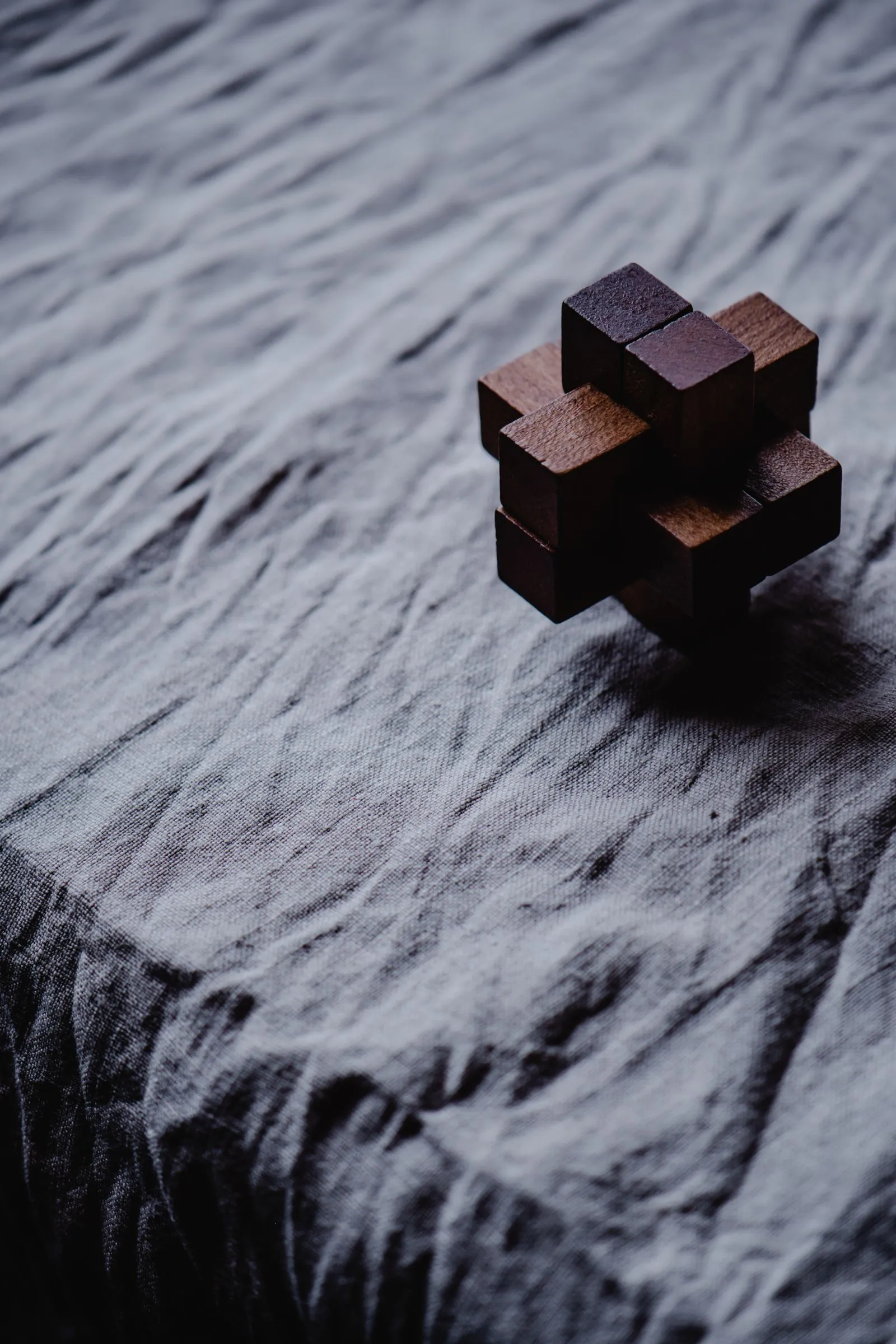
5 min read
Burr and Ring Puzzles: Piece Counts, Levels and Move Counts
Two of the oldest mechanical puzzles, and both get harder by a number you can read before you buy.
Subject
Every mechanical puzzle carries a number that tells you how long it will take, and most people read it wrong.
Two of the oldest mechanical puzzles, and both get harder by a number you can read before you buy.
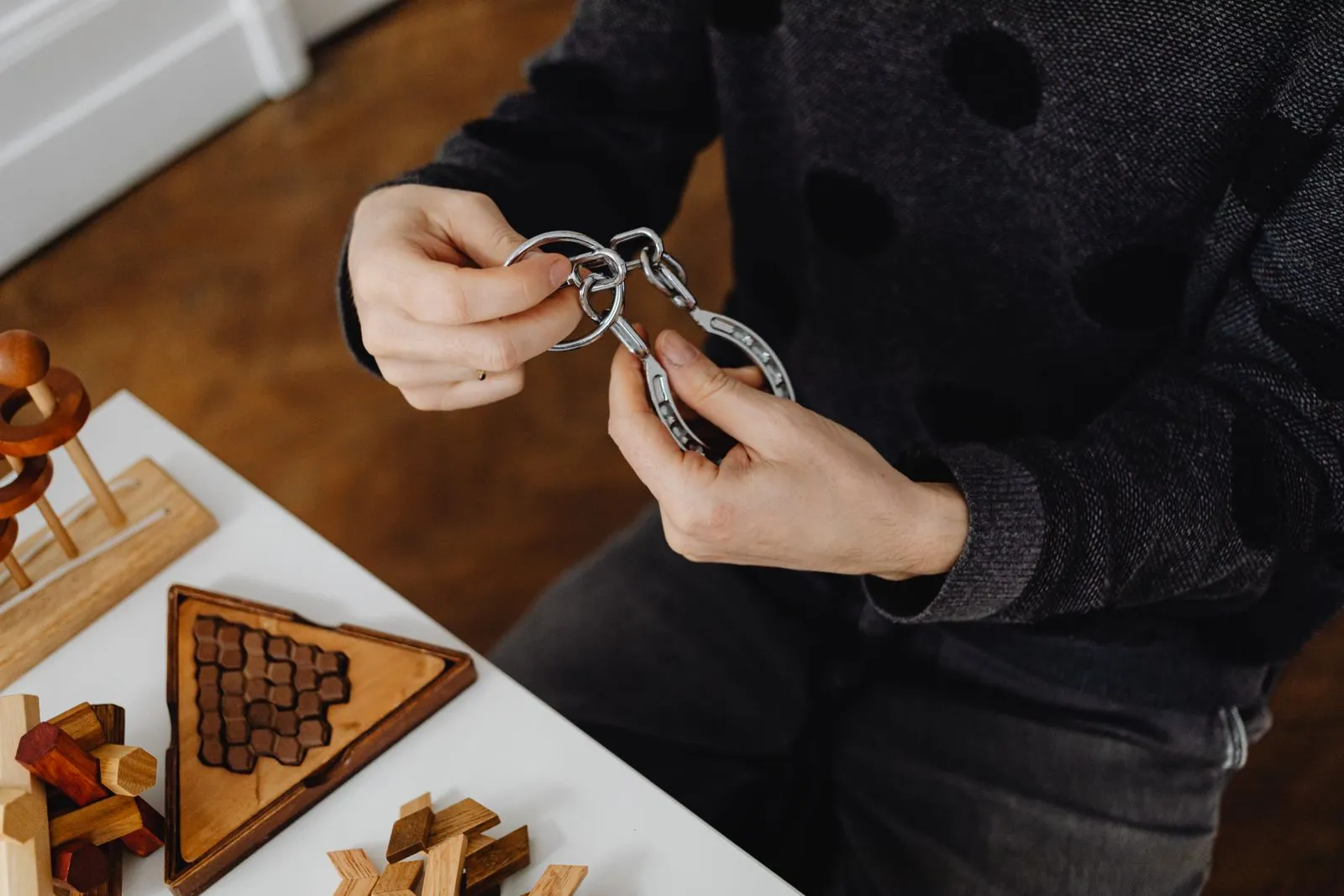
The scale on the box is useful, but only once you know how loosely makers apply it.
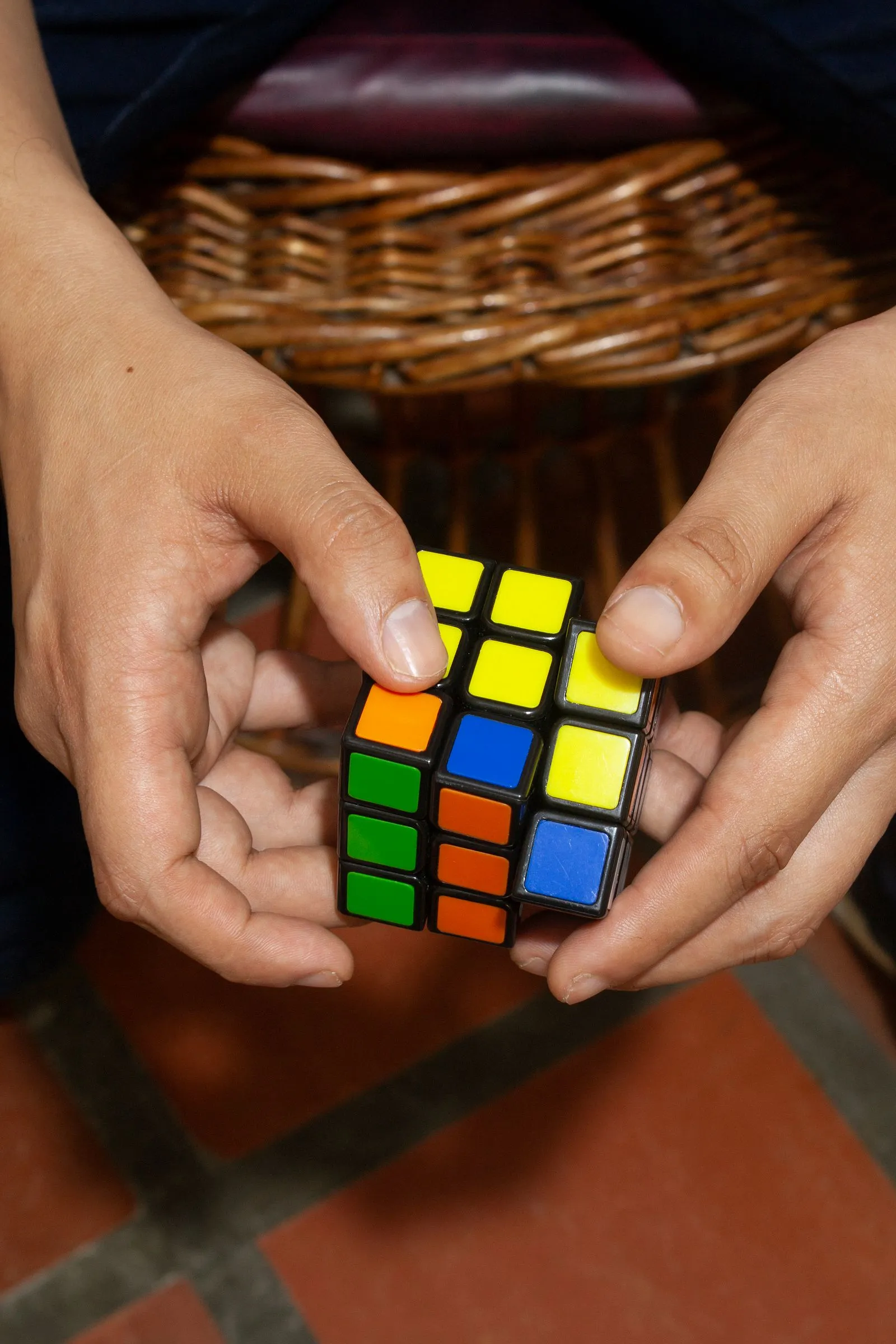
The cube you learned on was probably fighting you. Here's what a good one does differently.
Buying a mechanical puzzle looks like a question about how smart you are. It is really a question about how many evenings you want to lose. Every category advertises its answer with a number, and the number is more honest than the marketing: a difficulty level, a piece count, a ring count, a move count. Learn to read those four and you stop buying puzzles that sit unsolved on a shelf.
The mistake people make most is treating those numbers as linear. Level 6 is not twice level 3. A 12-piece burr is not twice a 6-piece burr. The Chinese rings puzzle makes the pattern plain: 5 rings solve in 21 moves, 9 rings in 341, roughly four times the moves for every two rings added. Piece counts, levels and move counts lays out where that curve goes vertical.
The 1 to 6 difficulty scale, which makers apply loosely and inconsistently. The piece count on a burr, plus its level, which is the number of moves to free the first piece. And 4.3 × 10¹⁹ — the positions of a 3x3 cube, which is the number that explains why a cube is solved with learned sequences rather than by trying things.
Level 2 or 3, and only one puzzle. What the 1 to 6 scale really means is worth reading before you order, because the same label means different things from different makers and a wire puzzle asks for a completely different kind of thinking than a cast one.
If cubes are the entry point, the cube you learned on was probably fighting you. Stiff, catching, no adjustable tension. What separates a good cube from a stiff one is mostly corner cutting — whether the thing turns when the faces are not lined up perfectly. Honest caveat: a better cube will not make you faster on its own, it just removes the excuse.
Because they are the one desk object with a definite end state, which is exactly the appeal after a day of work that has none. A puzzle gives you a problem that closes. Solve it, scramble it, do it again — that is the whole hobby, and nobody who has one is embarrassed about it.
That said, a puzzle is a commitment and some days your hands want something with no goal at all. Desk toys that just do one physical thing cover that end: a top, a cradle, a sand timer. Different itch, same corner of the desk.
We'd like to use Google Analytics cookies to see which guides get read. No ads, no selling data. Privacy policy.