Fidget Spinner Materials and Bearings: Brass, Steel, Titanium, Aluminium
Two spinners in the same shape can run for very different lengths of time. The metal and the bearing are why.
4 min read
- Brass, the densest common spinner metal
- 8.5 g/cm³
- Aluminium, about a third as dense
- 2.7 g/cm³
- The most common spinner bearing size
- 608
- Typical metal spinner price range
- $20–150
Metal fidget spinners in the same shape can feel completely different in the hand and run for very different lengths of time. Almost all of that comes down to two things: what the body is made of, and what’s in the middle.
The body sets the weight. The bearing sets how much of that weight’s energy gets wasted as friction. Get both right and a spinner runs for minutes from one flick.
Why weight at the rim means a longer spin
A spinner is a flywheel. Once you flick it, the only thing slowing it down is friction in the bearing and a little air drag. The more rotational momentum it carries, the longer that friction takes to use it up.
Two things add momentum: more mass, and mass placed further from the centre. That’s why good spinners put their weight out at the arms or rim, sometimes with dense inserts at the tips, and keep the middle lean. A heavier rim means more momentum from the same flick, which means a longer spin.
Body materials compared
| Metal | Density | Relative weight (same shape) | Feel and tradeoffs | Typical price |
|---|---|---|---|---|
| Aluminium | ~2.7 g/cm³ | 1x | Light, easy to carry, shortest spin. Usually anodized in colour | $20–40 |
| Titanium | ~4.5 g/cm³ | ~1.7x | Mid weight, very hard wearing, doesn’t tarnish. Costly to machine | $60–150 |
| Stainless steel | ~7.9 g/cm³ | ~2.9x | Dense, long spin, holds a polish | $30–80 |
| Brass | ~8.5 g/cm³ | ~3.1x | Heaviest common option, longest spin, tarnishes to a patina | $35–90 |
Copper sits right up with brass, at around 8.9 g/cm³. Some makers mix metals: an aluminium or titanium body with brass or tungsten weights pressed into the tips, which puts the mass exactly where it does the most work.
The practical tradeoff is carry. A brass spinner is a desk object. An aluminium or titanium one lives in a pocket without complaint. And brass goes darker and warmer with handling; some owners polish it back, many leave it.
The bearing is what makes the spinner
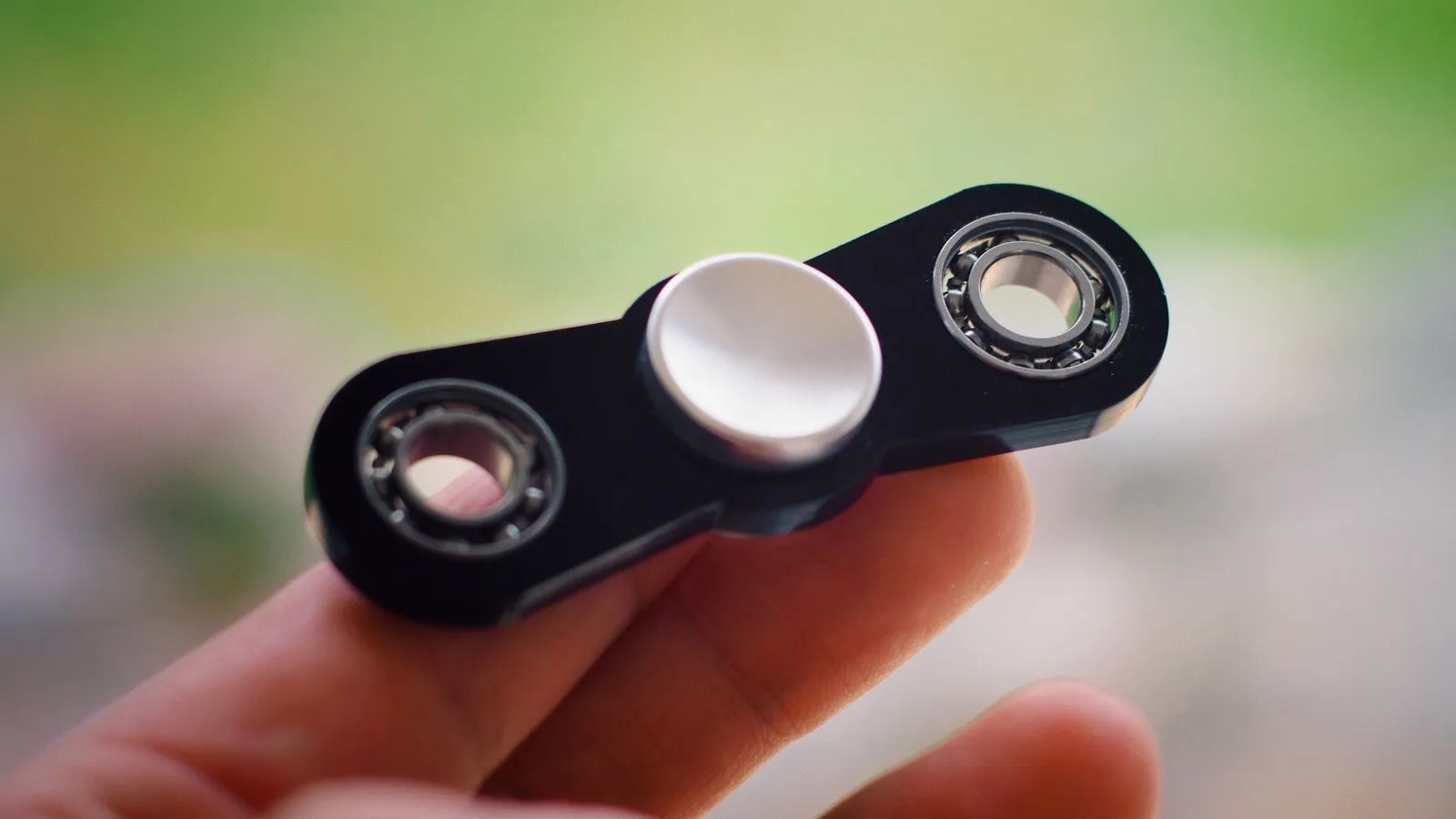
Most spinners use a single ball bearing in the centre. The standard size is the 608: 22 mm outer diameter, 8 mm bore, 7 mm wide, the same bearing used in skateboard wheels. Smaller spinners often use an R188, which is about 12.7 mm (1/2 in) across.
The bearing comes in three main types:
| Bearing | Balls | Races | Spin | Noise | Watch for |
|---|---|---|---|---|---|
| Steel | Steel | Steel | Good when clean | Gets louder as it wears | Can rust; needs the odd clean |
| Hybrid ceramic | Ceramic | Steel | Longer | Quieter | Costs more; the spec most metal spinners use |
| Full ceramic | Ceramic | Ceramic | Long, often run dry | Can have a dry hiss | Brittle if dropped; pricey |
Ceramic balls, usually silicon nitride, are less than half as dense as steel, harder and smoother. Lighter balls mean less friction, so a hybrid ceramic bearing typically spins longer and quieter than all-steel and doesn’t rust. For a spinner that gets used daily, the hybrid ceramic bearing is the spec we’d pay for.
What the ABEC rating does and doesn’t mean
ABEC is a tolerance scale for bearings, in odd numbers: 1, 3, 5, 7 and 9. Higher numbers mean tighter manufacturing tolerances. They don’t directly mean faster, and they say nothing about materials or lubrication.
At spinner speeds, an ABEC 3 bearing that’s clean and dry will often outrun an ABEC 7 packed with thick grease. Owners tend to report that cleaning a new bearing makes more difference than the rating on the box. Treat ABEC as a sign the maker cared, not as a spin-time number.
How to clean a bearing
Many new spinners ship with grease in the bearing to keep it quiet and protected. It also slows it down. Dust and pocket lint do the same over time. Cleaning takes about ten minutes.
- Remove the bearing from the body, if the design allows. Many press-fit bearings push out with a thumb.
- Pop the shields off if they’re removable. A pin or a thin blade under the edge usually does it. Some bearings are sealed and can’t be opened; skip them.
- Soak it in isopropyl alcohol (90% or stronger) for a few minutes, swirling or shaking it. Mineral spirits or acetone also work.
- Spin it in the solvent a few times to push out the old grease, then swap for clean solvent and repeat until nothing comes out.
- Dry it completely. Let it air dry, or use a hair dryer on low. Any leftover solvent slows it.
- Decide dry or oiled. Dry spins longest but is louder and wears faster. One small drop of thin bearing oil makes it quieter and longer-lived, at the cost of some spin time.
Replace the shields, press it back in, and the spin time usually comes back.
The short version
- Weight at the rim means more momentum and a longer spin.
- Brass ~8.5, steel ~7.9, titanium ~4.5, aluminium ~2.7 g/cm³. Heavier spins longer; lighter carries better.
- Hybrid ceramic bearings spin longer and quieter than steel and don’t rust.
- ABEC is a tolerance rating. A clean bearing matters more.
- Slow spinner? Clean the bearing in isopropyl alcohol before blaming the spinner.