
4 min read
Desk Toys That Stay on the Desk: Tops, Newton's Cradles and Sand Timers
The desk toys worth keeping are the ones that do one physical thing well. Here's how to tell.
Subject
Something for your hands on a long call is fine. Something your whole team can hear is not.
The desk toys worth keeping are the ones that do one physical thing well. Here's how to tell.
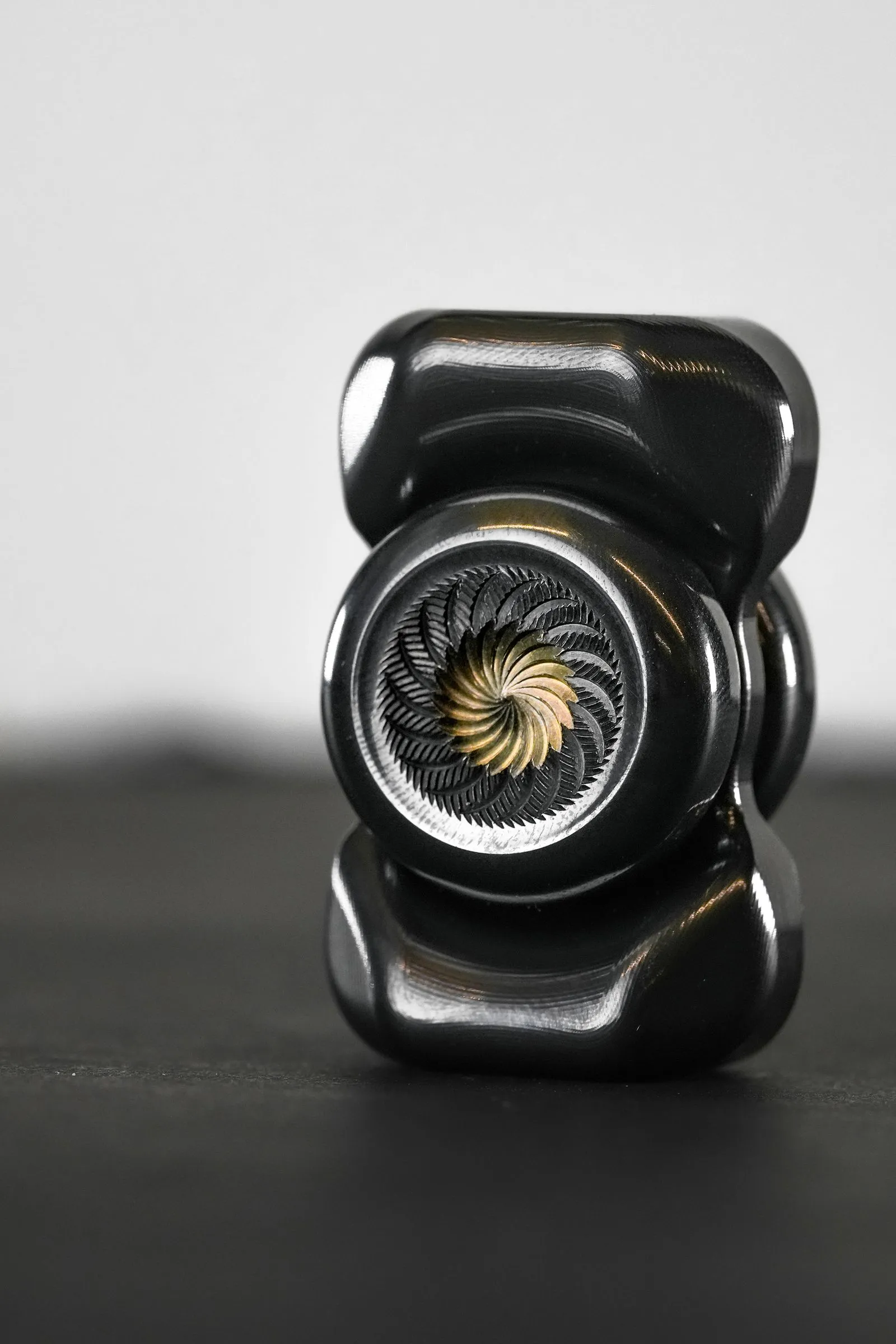
Two spinners in the same shape can run for very different lengths of time. The metal and the bearing are why.
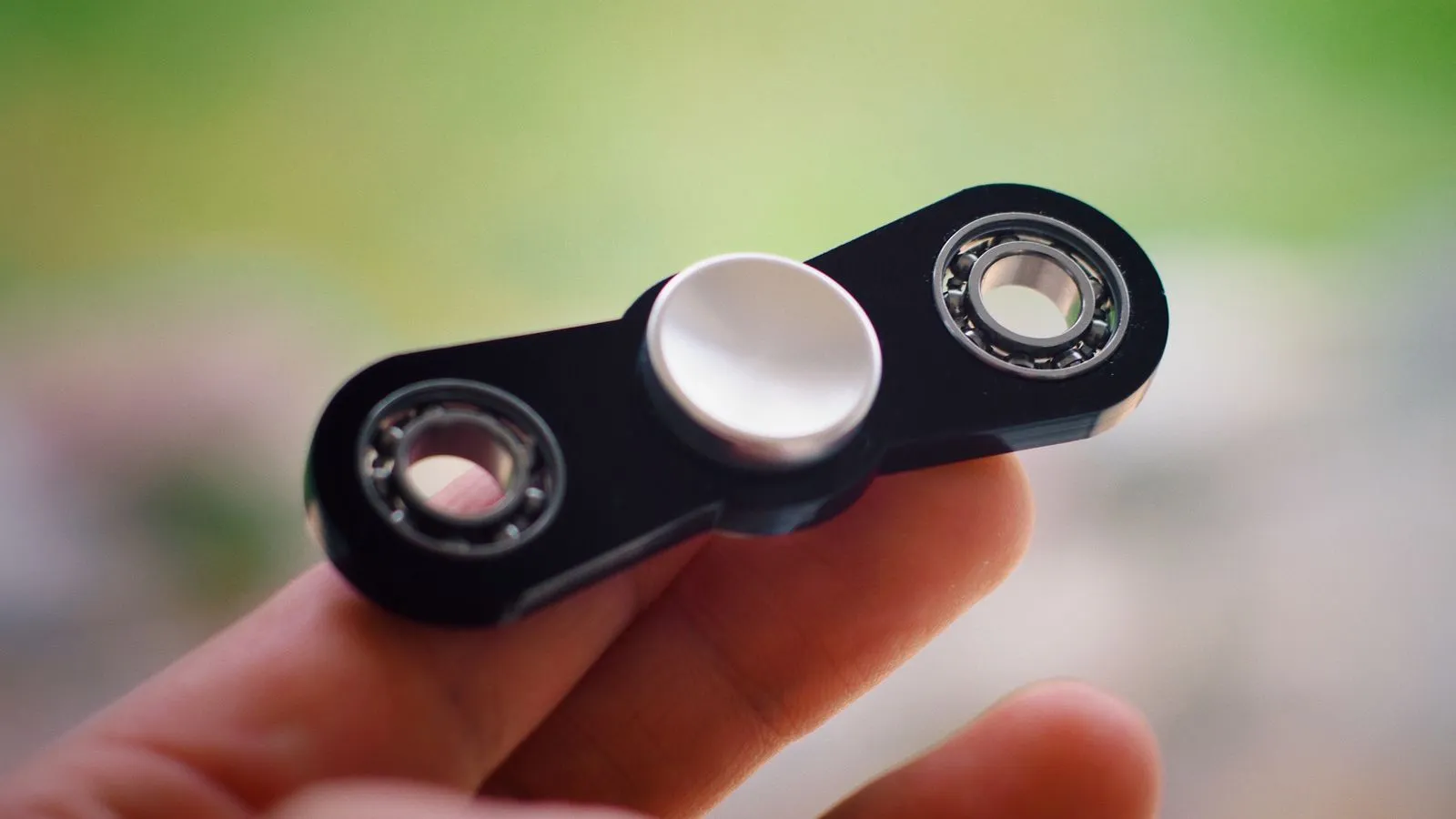
Something for your hands on a long call is fine. Something your whole team can hear is not.
Fidgets get chosen from photographs and then used in a room with other people in it. That is the whole problem. A magnetic clicker feels excellent and carries across an open office. A spinner looks like it should be loud and is nearly silent. So the first filter is not material or price, it is noise — and ranking fidgets by how much noise they make is the sorting that actually predicts whether you keep using one at work.
The second filter is whether it needs your eyes. A slider you can work under the desk during a call is a different object from a puzzle-ish thing you have to look at. Both are fine. Only one of them survives a meeting.
Two bits of physics explain most of this pillar. First, mass at the rim: brass is about 8.5 g per cubic centimetre, aluminium about 2.7, so the same shape in brass carries three times the material and spins far longer. Second, the bearing, which is the part nobody shops for and the part that decides everything. 608 is the common size. What the metal and the bearing each decide also covers the ABEC number, which is genuine engineering applied to a context that does not need it.
Honest caveat on brass: it darkens with handling. Some people want that patina, others keep polishing it off. Decide which one you are before you spend the money.
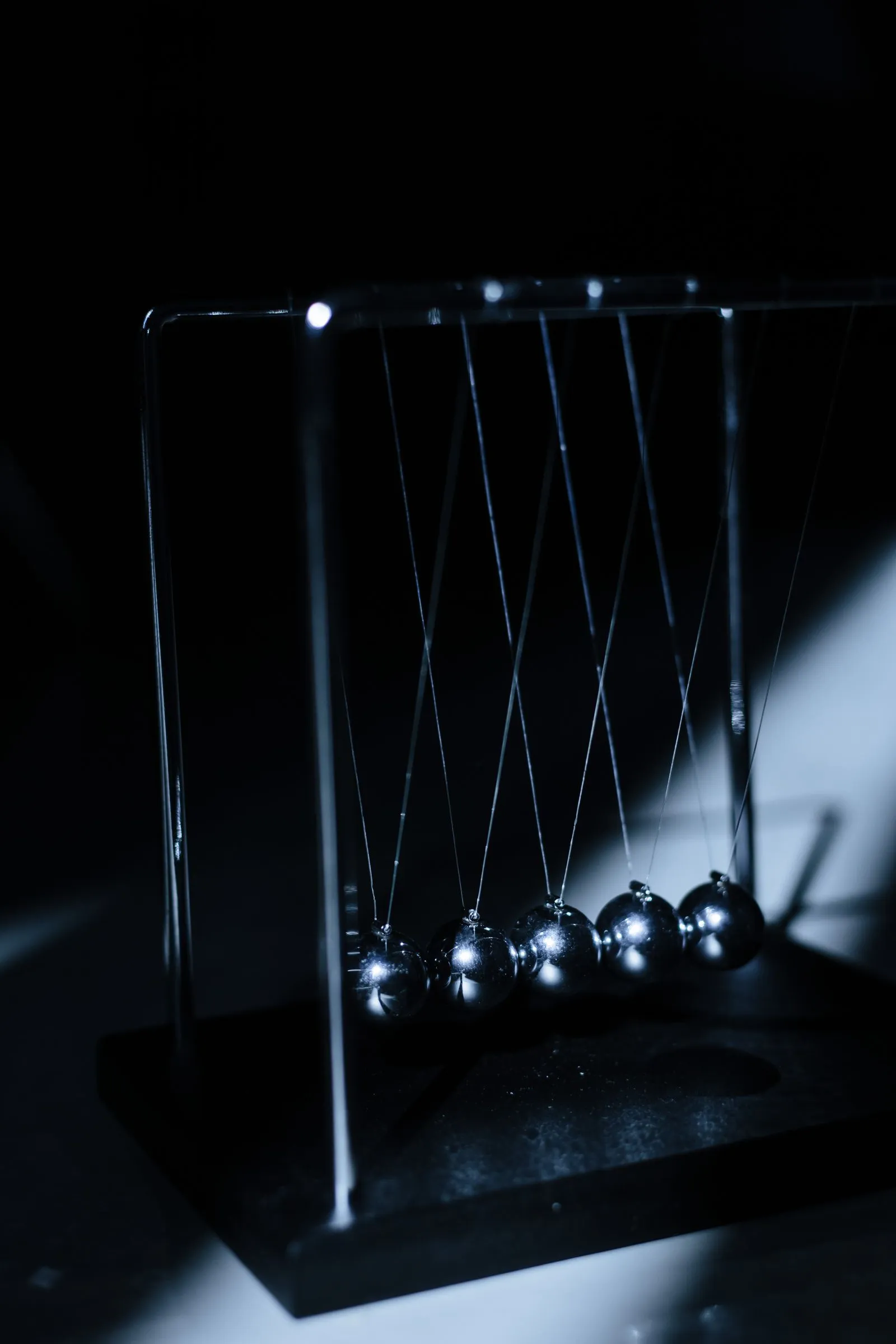
Not everything for your hands is a fidget you pocket. A spinning top, a Newton’s cradle, a set of 216 five-millimetre magnetic balls, a sand timer at 5, 15 or 30 minutes — the desk toys worth keeping all share a trait, which is that they do one physical thing well and do not ask for a decision. The sand timer is the sleeper. It measures a break without a notification.
Buy one quiet thing in metal. That is it. Weight is most of what makes a fidget satisfying, and a cheap plastic version of a good design usually teaches you the wrong lesson about the design.
To be clear about what these are for: they keep your hands busy while you think, and they give you something to do on a call. That is the claim, and it is the whole claim. If you want a problem with an actual end state instead, puzzles sorted by how long they take are the other half of this corner of the desk.
We'd like to use Google Analytics cookies to see which guides get read. No ads, no selling data. Privacy policy.