Puzzle Cube Guide: What a Good Cube Does and What to Solve Next
The cube you learned on was probably fighting you. Here's what a good one does differently.
4 min read
- Possible positions of a 3x3 cube (about 43 quintillion)
- 4.3 × 10¹⁹
- Typical 3x3 cube size, about 2.2 in
- ~56 mm
- Price range for a decent modern 3x3
- $10–60
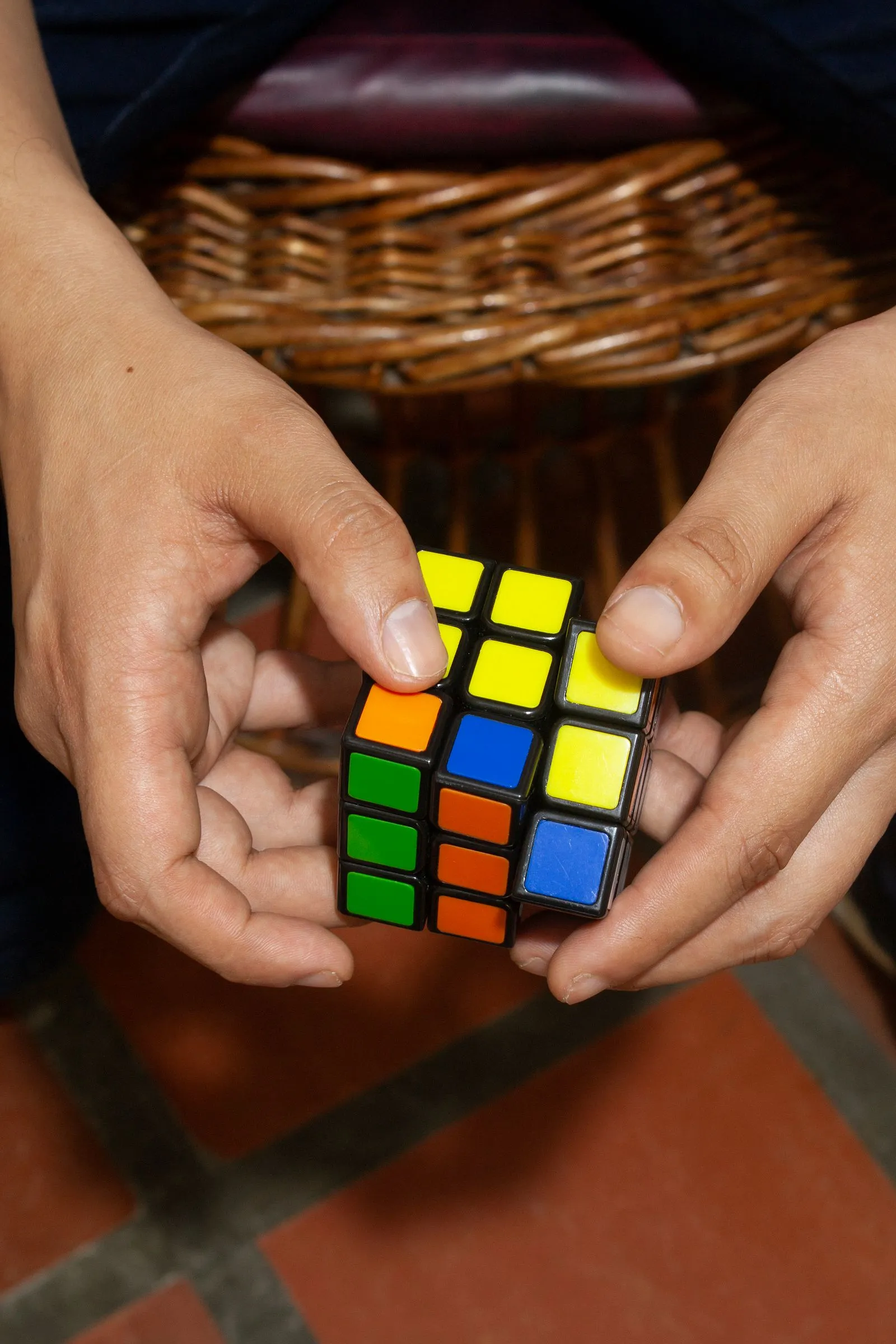
Most people who learned the cube as kids learned on a stiff, stickered one that locked up mid-turn. Modern speed cubes are a different object. They cost about the same as a hardcover book and turn like they’re on bearings.
If you’re buying one for a desk, or buying your next one, here’s what actually matters, which finish holds up, and what to pick up once the 3x3 is routine.
4 things a good cube does
- Turns smoothly without catching. A face should turn with a light push and stop where you leave it. Scratchy or gritty turning is usually the plastic, and it rarely goes away.
- Cuts corners. A good cube will turn a face even if the layer next to it isn’t lined up yet. The cube forgives a slightly sloppy move instead of locking. Around 45 degrees of corner cutting is a commonly quoted figure for a good modern 3x3; cheap cubes lock up at a fraction of that.
- Has tension you can adjust. Most modern cubes let you tighten or loosen the layers, either with screws under the centre caps or with a dial system. Tighter is more stable; looser is faster but can pop pieces.
- Holds its colours. Stickers peel. More on that below.
Magnets are the fifth thing, and most mid-range cubes have them now. Small magnets in the pieces pull each layer into alignment as it finishes a turn. The result is a cube that feels crisp and lands where you meant it to. Some people prefer non-magnetic cubes for a looser, freer turn, which is why many models come in both versions.
Stickered vs stickerless vs tiled
The finish decides how the cube looks after a year on the desk.
| Finish | How it’s made | Holds up | Notes |
|---|---|---|---|
| Stickered | Vinyl stickers on a black or white body | Worst. Corners lift and chip with heavy use | Replacement sticker sets exist and are cheap |
| Stickerless | Pieces molded in coloured plastic | Best. Nothing to wear off | Most modern speed cubes ship this way |
| Tiled | Thin plastic tiles glued onto the body | Good. Thicker than stickers, less likely to peel | Nice feel under the thumb; can pop off if knocked hard |
For a cube that gets turned every day, we’d go stickerless. The colours are brighter than most stickers, there’s no edge to catch a fingernail, and it looks the same in year three as on day one. The one tradeoff: some people find stickerless colours slightly harder to tell apart, especially orange and red under warm light.
What to solve after a 3x3
Once the 3x3 is routine, you have three common next steps. Each one teaches something different.
| Puzzle | What changes | Why it’s worth it |
|---|---|---|
| Mirror cube | Same mechanism as a 3x3, but every piece is silver and a different size | You solve by shape instead of colour. Same moves, new eyes |
| 4x4 | No fixed centres, so you build them first. Then a 3x3 solve with new cases | Introduces parity: positions that can’t happen on a 3x3 |
| 2x2 | Only the 8 corners | Pure speed. Just over 3.6 million positions, so it’s short |
The mirror cube is the easiest next step. You already know every algorithm; the hard part is recognizing pieces by height and shape when it’s scrambled. It’s also the best-looking cube on a desk, since a solved mirror cube is a clean silver block, and a scrambled one looks like sculpture.
The 4x4 is the biggest step up. Parity is the headline: at the end of a solve you can land in a position that a 3x3 simply can’t reach, like a single flipped edge pair. You’ll need a couple of extra algorithms for it. Expect a first solve to take an evening or two.
The 2x2 looks like a step down, and in some ways it is. It’s where people go to get fast, because the whole thing can be solved in a handful of moves once you know the cases.
We’d go mirror cube first, then 4x4. The 2x2 is a good second gift, not a good first one.
Where the cube lives on a desk
A 3x3 speed cube is about 56 mm (2.2 in) on a side, which is small enough to sit next to a keyboard without taking space from anything. A small stand keeps it from rolling and makes a solved cube look deliberate rather than left out.
One practical note: a cube on a desk gets picked up on calls. The turning sound of a good cube is quiet, a soft click at most, but a cheap stiff cube is noticeably louder.
The short version
- A good cube turns smoothly, cuts corners, lets you adjust tension and keeps its colours.
- Magnets help a cube land where you meant it to. Most mid-range cubes have them.
- Go stickerless for a cube that gets used daily. Stickers peel; tiles are a fair middle ground.
- After a 3x3: mirror cube for a new way of seeing, 4x4 for parity, 2x2 for speed.