Gifts for Someone Into Mechanical Keyboards (and How Not to Get It Wrong)
Keyboard people are easy to buy for and easy to buy the wrong size for. A phone photo of their board solves most of it.
4 min read
- The range most good keyboard gifts fall in
- $15–150
- The spacebar a keycap set should include
- 6.25u
- Desk mat size for keyboard plus mouse
- 900×400 mm
- Of their board, taken before you buy
- 1 photo
Someone into mechanical keyboards already has a keyboard, and probably doesn’t want you to pick their next one. The good gifts sit around it: things that change how it looks, make tinkering easier, or tidy the desk it lives on.
The catch is fit. Keyboards come in a lot of sizes and layouts, and a keycap set that’s missing one key is a gift that goes in a drawer. So before anything else, get a clear top-down photo of their board. Wait until they’ve left the room.
The list, by budget
| Gift | Rough price | Fit risk | What to check |
|---|---|---|---|
| Keycap puller (wire) | $5–15 | None | Wire, not plastic ring |
| Coiled USB-C cable | $20–50 | Low | USB-C at the keyboard end |
| Switch tester | $15–40 | None | Enough switch types to compare |
| Desk mat | $20–60 | Low | Size against their desk |
| Cleaning kit | $10–25 | None | Brush plus a wire puller |
| Precision screwdriver set and magnetic tray | $20–50 | None | Small Phillips and hex bits |
| Wrist rest | $20–60 | Medium | Height and width of their board |
| Artisan keycap | $30–150 | Medium | Stem, size, weight, height |
| Keycap set | $35–150 | High | Every size on their bottom row |
A keycap set, if you do your homework
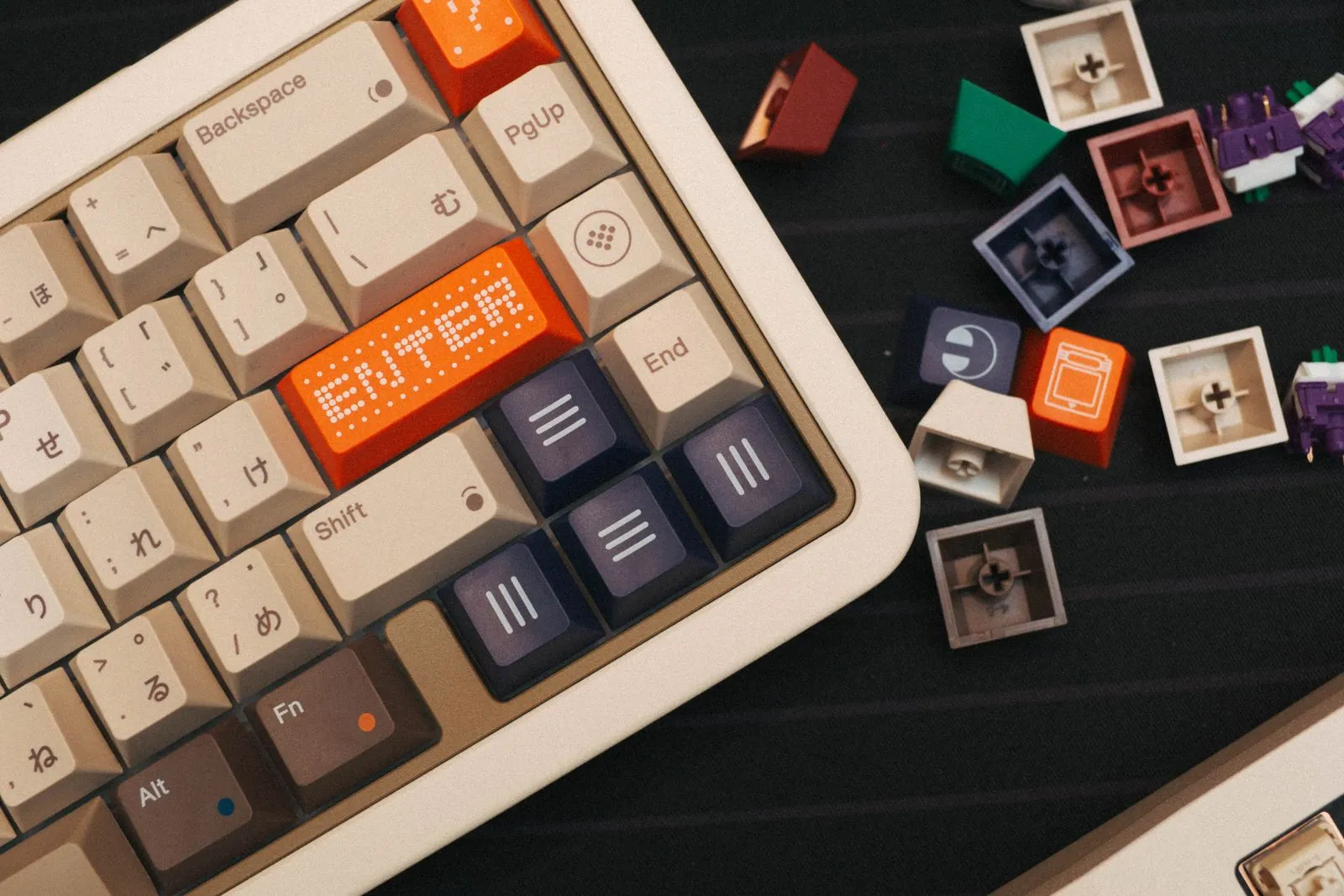
This is the gift they’ll notice most, and the one with the most ways to miss. Using that photo, check four things:
- Spacebar length. 6.25u fits most boards. If theirs looks unusually long or is split in two, check the set covers it.
- Right Shift. 2.75u on full-size and tenkeyless boards; often a short 1.75u on compact 65% and 75% boards.
- Bottom row. Count the keys either side of the spacebar. Compact boards often have three small 1u keys to the right.
- Enter shape. A tall, upside-down-L Enter means ISO. Most sets are ANSI first, so look for an ISO add-on kit.
Then the quality checks. PBT plastic goes shiny much slower than ABS. Doubleshot or dye-sub legends won’t rub off. Cross-shaped stems fit most boards. If their keyboard is very thin, it’s probably low-profile, and those usually need their own caps. Skip the set in that case.
An artisan keycap: four checks
An artisan is a single sculpted cap, often resin or metal, usually one per board. Easier than a full set, but still:
- Stem. It has to match their switches. Most artisans use the common cross-shaped stem.
- Size. Most are 1u, which fits Esc or any letter. Esc is where most people put one.
- Weight. Metal caps weigh far more than resin. Some people like the heft; some find it changes how the key feels.
- Height. A tall sculpt needs room under a case lid or dust cover, and it should suit the row it’s sculpted for.
A wrist rest matched to their board
Only worth it for a full-height board, the kind that stands around 30–40 mm (1.2–1.6 in) at the back. A rest should sit level with the front edge of the keyboard and run about as wide as the keys: roughly 44 cm (17 in) for full size, 36 cm (14 in) for tenkeyless, and 30 cm (12 in) for 65% or 60%. Wood and foam both work. If their board is low-profile, skip it.
A switch tester
A small block of individual switches, often 9 to 20 or more, each with a keycap on top. It’s the cheapest way to try linear, tactile and clicky side by side before buying a full set of switches. For someone with a hot-swap board, it’s also a shopping list. No fit risk at all.
A desk mat
The size most people want for keyboard and mouse is about 900 × 400 mm (35 × 16 in). A full-desk pad runs about 1200 × 600 mm (47 × 24 in), which needs a desk at least that deep. A mat also takes some of the ring out of typing on a hard desk. Stitched edges hold up better than raw cut ones.
A coiled cable
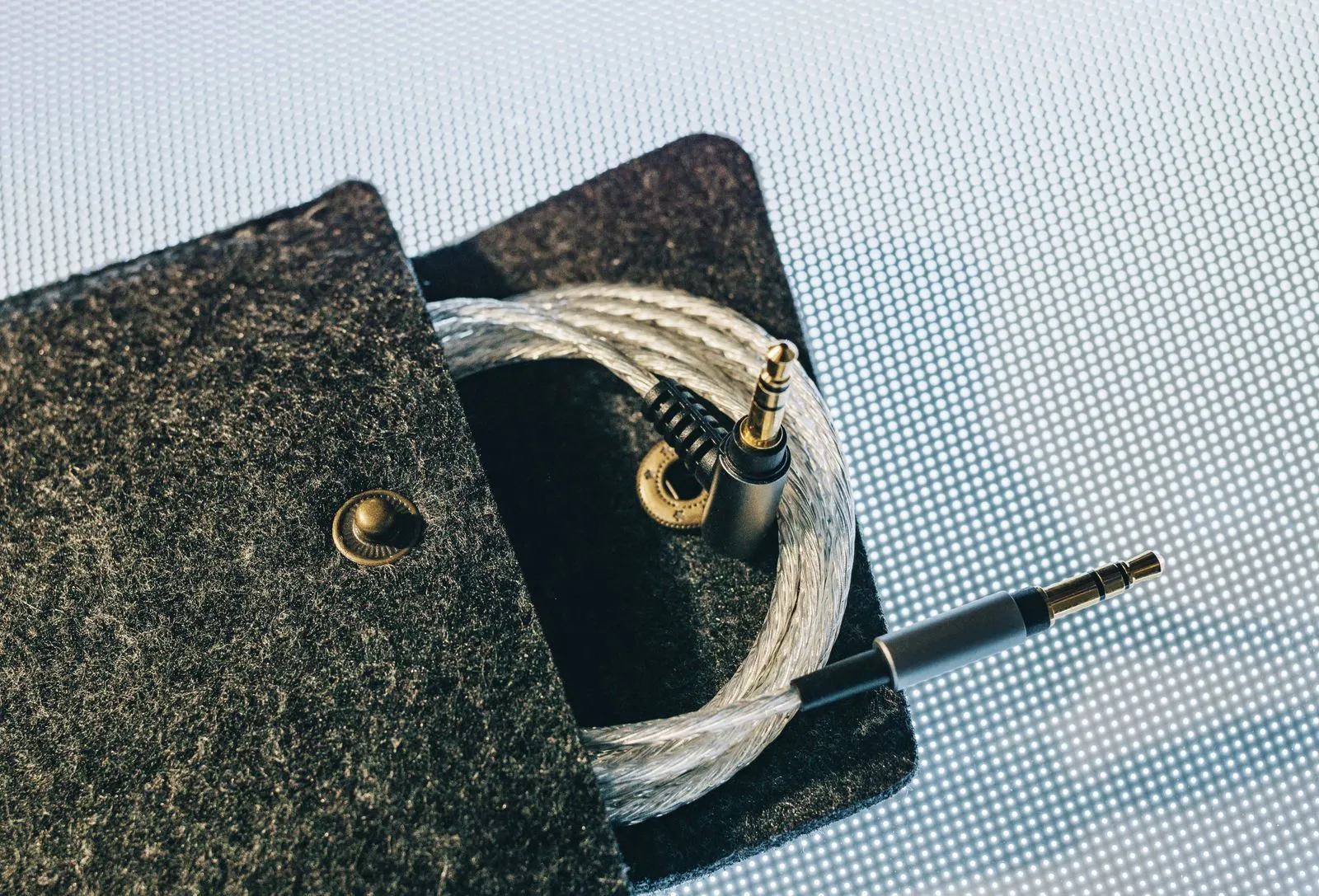
Most keyboards ship with a plain straight cable. A coiled one is a small, visible upgrade, and it’s what people often buy themselves second. Check the keyboard end is USB-C, and match the colour to the keycaps if you can see them. Some come with a detachable aviator-style connector in the middle, which is mostly for looks.
A puller and a cleaning kit
A wire keycap puller hooks under two corners and lifts straight up. The plastic ring type clamps the sides and can scuff softer caps, so give the wire one. Pair it with a soft brush and the job becomes a quick routine:
- Unplug the board and photograph the layout.
- Pull the caps straight up and brush the dust off the plate.
- Soak the caps in warm, soapy water.
- Let them dry a full day before pressing them back on. Never soak the board itself.
Add a precision screwdriver set and a magnetic tray for anyone who opens their case. Screws and springs stay put during a rebuild.
The short version
- Take a top-down photo of their board before buying anything that has to fit.
- Zero-risk gifts: wire puller, switch tester, cleaning kit, screwdrivers and a tray.
- Keycap sets: check spacebar, right Shift, bottom row and Enter shape.
- Artisans: stem, size, weight, height.
- Wrist rests only for full-height boards, matched to height and width.